Scoliosis – New Research

Scoliosis is a lateral curvature of the spine that mostly occurs in the growth spurt just before puberty. Although scoliosis can be caused by conditions such as cerebral palsy and muscular-dystrophy, the cause of many scoliosis conditions are unknown to the medical community.

Dr. Fred Barge stated in his 1981 book Scoliosis that “From the time children are very young, the swing, play pens and walkers, are encouraging children to walk too soon. Exercises in school such as sit-ups, and bending over touching the toes are destructive to the proper development of normal spinal contours. The enforced sitting in school all day also contributes to improper development of normal spinal curves. All of these things can lead to the development of curvatures and scoliosis. If the problem is detected early in a young child, it can often be straightened. Regular chiropractic examination, especially after a severe fall or sports activity, can detect spinal subluxations. Chiropractic spinal adjustment can correct these misalignments and return the spine to its proper position.”

Medical treatment for scoliosis in children is bracing, according to researchers “Bracing in adolescent males had unsuccessful results in 76 percent of the cases, with 46 percent requiring surgery for idiopathic scoliosis” . It is estimated that  38,000 teen and young adults undergo spinal fusions per year in the United States from failed bracing techniques.

A recent study on Scoliosis & Chiropractic care –

leads to positive outcome among the cohort of participants

A 2011 study concluded that as a result of chiropractic spinal adjusting and chiropractic spinal manipulation, a thoracolumbar curvature (scoliosis) averaged a 17.2° reduction that was maintained for 24 months, the length of the study. Across all spinal groups, an average 10° reduction persisted for 24 months, again the length of the study. It was also concluded that pain scales reduced by 60 percent at 24 months and function improved by 70 percent, while respiratory capacity increased by 7 percent

If you know someone who suffers from scoliosis, have them evaluated by your local chiropractor, to see if chiropractic may be an option for them.
Back Surgeries in the South

How dangerous is a spinal surgery?

According to the Agency for Healthcare Research and Quality (AHRQ),  which is part of the Federal Government that tracks medical statistics, Southerners are 45% more likely to have a spinal surgery than people in the Northeast and West regions of the United States. You also have a 1 in 500 chance of death. It will cost $80,998 on average to have the surgery. In 2010, the US spent $15.5 Billion on spinal surgeries.  http://www.ahrq.gov/

Agency for Healthcare Research and Quality (AHRQ)

Spinal Surgery
Region Total number of discharges Charges, $ (mean) In-hospital deaths
Northeast 66,437 (15.36%) 73,423 172 (0.26%)
Midwest 92,369 (21.35%) 80,561 197 (0.21%)
South 189,709 (43.86%) 80,998 370 (0.20%)
West 84,030 (19.43%) 121,400 177 (0.21%)
Weighted national estimates from HCUP Nationwide Inpatient Sample (NIS), 2009, Agency for Healthcare Research and Quality (AHRQ), based on data collected by individual States and provided to AHRQ by the States. Total number of weighted discharges in the U.S. based on HCUP NIS = 39,434,956. Statistics based on estimates with a relative standard error (standard error / weighted estimate) greater than 0.30 or with standard error = 0 in the nationwide statistics (NIS, NEDS, and KID) are not reliable. These statistics are suppressed and are designated with an asterisk (*). The estimates of standard errors in HCUPnet were calculated using SUDAAN software. These estimates may differ slightly if other software packages are used to calculate variances.

60% of Low Back Surgeries could be avoided

with Chiropractic Care

Medical Researchers have said:  Sixty percent of patients, who had failed other medical management, benefited from spinal manipulation to the same degree as if they had undergone surgical intervention. http://www.ncbi.nlm.nih.gov/pubmed/21036279 “Sciatica is a serious spinal condition that causes pain, numbness, or weakness in one or both legs. Many times symptoms become debilitating and without further help, surgery is prescribed to alleviate discomfort. But surgery is not without financial and physical drawbacks.”  The study also looked at the costs: for every $1.00 spent with a chiropractic provider, it saved $22.90 in medical care.

If you’re looking for a less invasive approach to your healthcare, at Palmer Chiropractic we focus on natural chiropractic care. Chiropractors adjust the spine and vertebra to relieve nerve interference that restricts the expression of life. Serving Richmond Hill, Savannah, Midway, & Georgetown.

Headaches and Migraines – Relief Update

Palmer Chiropractic in Richmond Hill –  Most headaches are not fatal but they negatively impact the quality of our lives. In bad cases,  headaches restrict our occupation and social life. Headaches have a wide range of causes including infection, hangovers, mal-nourishment, lack of sleep and even serious conditions, such as subluxations, aneurysms, tumors, and TIAs.

The most common headaches include tension and migraine, which are associated with nervous system disorders. Almost 280 million people in the U.S. will experience some type of headache. Nearly 14 million people experience headaches on a near-daily basis (one in five women and one in twenty men, experience migraine headaches). About 10% of school-age children suffer from migraines. American employers lose more than $13 billion each year as a result of 113 million lost work days.  Migraines cost employers and employees billions of dollars.

In a migraine headache, the blood vessel on the outside of the skull under the skin of the temple enlarges. When this occurs, nerves around the artery stretches and releases compounds that cause irritation and severe pain. The larger the blood vessel gets, the more intense the pain.

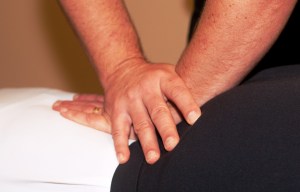
Chiropractor - Adjustment

Most people know Chiropractic care can benefit patients for tension/cervicogenic headaches. But, can Chiropractic care help migraines too? Here’s what research dating all the way back to 1997 says… The study, published in the Journal Of Manipulative And Physiological Therapeutics (2011), compared  medication, spinal adjustments, and the combination of both medication and adjustments. There was a 4 week baseline period, followed by 8 weeks of treatment and then 4 weeks of follow-up on a total of 218 patients diagnosed with migraine headaches.

RESULTS: “Clinically important improvement was observed in both primary and secondary outcomes in all three study groups over time. The reduction in headache index scores during treatment compared with baseline was 49% for amitriptyline, 40% for spinal manipulation, and 41% for the combined group. During the post-treatment follow-up period, the reduction from baseline was 24% for amitriptyline, 42% for spinal manipulation, and 25% for the combined group.”

CONCLUSION: “There was no advantage to combining amitriptyline and spinal manipulation for the treatment of migraine headaches. Spinal manipulation seemed to be as effective as a well-established and efficacious treatment (amitriptyline). And on the basis of a benign side effects profile, it should be considered a treatment option for patients with frequent migraine headaches.”

Chiropractic is the science and art of finding and correcting vertebra that are misplaced and causing neurological dysfunction. By moving the vertebra back to its normal position and allowing the command and control system of the body (nervous system) to function at optimum performance, your body is free to function as it should. Call today to schedule an appointment with your chiropractor.

Yours in health,

Dr. Trace Palmer

Palmer Chiropractic

11400 Ford Ave

Richmond Hill, Ga 31324

912-756-3433

2011 Study – http://www.ncbi.nlm.nih.gov/pubmed/21640251 JMPT

2010 Study – http://www.ncbi.nlm.nih.gov/pubmed/19837005 Spine Journal

2001 Study – http://www.ncbi.nlm.nih.gov/pubmed/11562654 JMPT

1998 Study – http://www.ncbi.nlm.nih.gov/pubmed/9798179 JMPT